Loading...
tech#CGM lag time#HIIT and blood sugar#Dexcom G7 vs Libre 3
The 15-Minute Lag: Mastering CGM Accuracy During High-Intensity Interval Training
Blood Sugar Control
February 26, 20268 min read

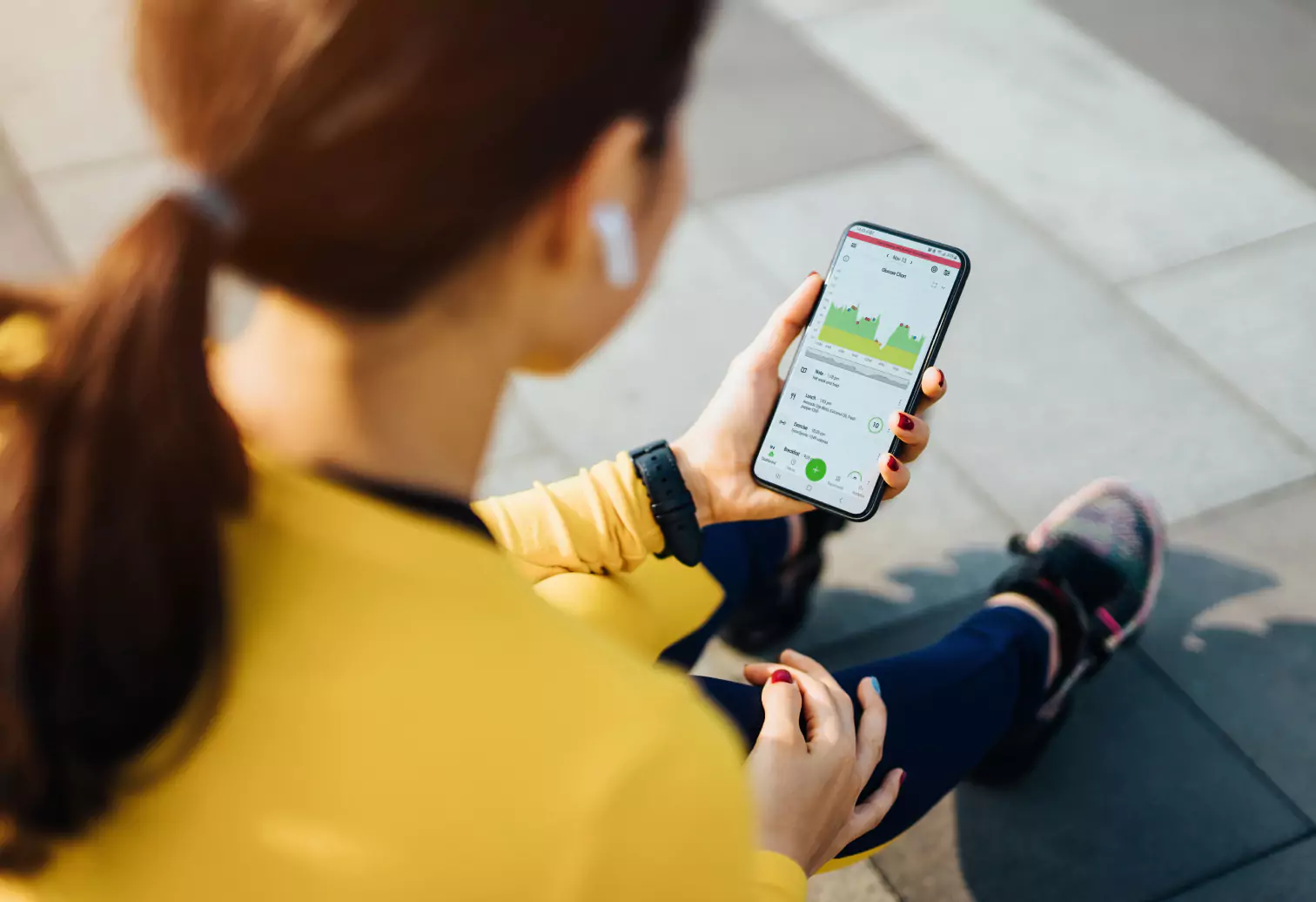
You’re mid-sprint, your heart is hammering against your ribs like a trapped bird, and sweat is stinging your eyes. You glance down at your wrist to check your Continuous Glucose Monitor (CGM) data. The screen shows a beautiful, steady 120 mg/dL with a flat horizontal arrow. You feel invincible. You finish the set, cool down for five minutes, and suddenly—buzz-buzz—your phone screams. Your sugar hasn't just dropped; it’s plummeted to 65 mg/dL with double-down arrows.
As someone who has lived with Type 1 Diabetes for years and tested every piece of wearable tech on the market, I know this frustration intimately. It’s the "ghost in the machine." You did the work, you checked the data, but the data lied—or rather, it was late to the party.
High-Intensity Interval Training (HIIT) is the "final boss" of diabetes management. It’s a chaotic storm of adrenaline, rapid glucose consumption, and localized insulin sensitivity. In this environment, your CGM is a powerful tool, but it isn’t a crystal ball. To master HIIT, you have to move beyond just reading the numbers; you have to understand the biological lag that governs the technology on your arm.
Biology 101: Interstitial Fluid vs. Capillary Blood
To understand why your CGM lags, we have to look at where it’s actually sitting. Your sensor probe doesn't live in your veins; it lives in the interstitial fluid (ISF), the thin layer of fluid that surrounds your cells.
Think of your bloodstream as a high-speed highway and the interstitial fluid as a side street. Glucose travels the highway first. When your muscles start screaming for fuel during a sprint, they pull glucose from the blood immediately. It takes time—anywhere from 5 to 20 minutes—for those changes in the blood to "seep" into the interstitial fluid where your sensor can detect them.
During HIIT, this delay is magnified. Because your muscles are consuming glucose at an accelerated rate, the "vacuum" created in your bloodstream happens so fast that the ISF can't keep up. You are essentially living 15 minutes in the future compared to what your phone screen is telling you.

The Heavy Hitters: Dexcom G7 vs. FreeStyle Libre 3 in Motion
When it comes to high-intensity performance, two devices dominate the conversation: the Dexcom G7 and the FreeStyle Libre 3. Both are marvels of engineering, but they handle the "HIIT storm" differently.
Dexcom G7: The Predictive Powerhouse
The Dexcom G7 is widely praised for its predictive algorithms. It doesn't just show you where you are; it tries to calculate where you are going. During HIIT, the G7’s "Urgent Low Soon" alert is a lifesaver. Because it analyzes the velocity of your drop, it can often warn you 20 minutes before you actually hit a hypoglycemic floor. However, in my experience, the G7 can sometimes "over-predict" during intense exercise, showing a steeper drop than what is actually happening as it tries to compensate for the lag.
FreeStyle Libre 3: The Low-Profile Champion
The Libre 3 is roughly the size of two stacked pennies. For HIIT athletes, form factor is a major plus. There is less surface area for a stray dumbbell or a sweaty t-shirt to snag. While its MARD (Mean Absolute Relative Difference) is incredibly low—meaning it’s very accurate—the Libre 3 tends to use more "smoothing" in its data. This means the graph might look prettier, but it might also hide the jagged volatility of a HIIT session until the workout is over.
:max_bytes(150000):strip_icc()/VWH-GettyImages-930125112-11279c18c23f4396919d1a7121e47e5b.jpg)
The role of MARD is crucial here. MARD is the industry standard for measuring CGM accuracy; the lower the percentage, the better. Both devices sit under 9%, but remember: MARD is often tested in "steady-state" conditions. When your heart rate is 170 BPM, that MARD "accuracy" can fluctuate wildly.
The HIIT Trap: Why Your Trend Arrows Might Be Lying
The most dangerous moment in a HIIT workout is the "Double Down" arrow. When you see two arrows pointing straight down, your CGM is telling you that your glucose is dropping by more than 3 mg/dL per minute.
The trap is that by the time the double-down arrow appears on your CGM, your blood glucose might have already bottomed out. Conversely, HIIT can cause a massive adrenaline spike. Adrenaline signals your liver to dump stored glucose (glycogen) into your bloodstream to fuel your "fight or flight" response. This can cause a temporary rise in blood sugar, followed by a massive crash once the adrenaline wears off.
If you treat a "rise" during a workout with insulin, you are setting yourself up for a catastrophic rebound low. The CGM might show a steady rise, but your muscles are simultaneously becoming 10x more sensitive to insulin. This is why the "smoothing" algorithms used by manufacturers can be tricky—they try to filter out "noise," but during HIIT, that "noise" is actually vital physiological data.

Calibrating Your Strategy: The 'Lag-Math' Formula
Since we know the 15-minute lag exists, we have to account for it mentally. I call this "Lag-Math." If my CGM says 110 mg/dL with a diagonal down arrow, I assume my actual blood sugar is already 90 mg/dL and falling.
To master this, you cannot abandon the fingerstick. While CGMs have made life easier, the manual glucose meter is still the gold standard for high-intensity scenarios. Before I start my first interval, I always use my Contour Next Gen meter. It is consistently ranked as one of the most accurate meters on the market, and in a HIIT setting, I need that precision.
If my CGM and my Contour Next Gen are more than 20 points apart before I start, I know I need to trust the meter, not the sensor.

Wearable Ecosystems: Real-Time Haptics for Faster Response
Checking your phone during a set of mountain climbers is impossible. This is where the wearable ecosystem becomes your greatest asset.
Apple Watch Ultra 2
The Apple Watch Ultra 2 is a beast for T1D athletes. With its massive, bright display, you can see your Dexcom or Libre data (via third-party apps like Sugarmate or the native Dexcom app) with a flick of the wrist. But the real "killer feature" is the haptic feedback. You can set custom alerts that vibrate your wrist with a specific pattern when you cross a certain threshold. This bypasses "alarm fatigue"—that phenomenon where you stop hearing your phone's chirps in a noisy gym.
Garmin Forerunner Series
For the data nerds, Garmin is king. Using the Connect IQ store, you can add "Data Fields" to your workout screen. This allows you to see your heart rate, pace, and CGM reading all on one screen. Seeing your heart rate climb while your glucose drops provides a "full picture" of your metabolic state that a phone app simply can't match.

Pro-Tips for Tech-Savvy Athletes
- The 'Overpatch' Essential: Sweat is the enemy of adhesive. If you’re doing HIIT, a standard CGM adhesive won't last three days, let alone ten. Use a high-quality overpatch like those from Skin Grip or ExpressionMed. These are designed to breathe and stay stuck even during the most grueling burpee sessions.
- The Pre-Workout Bolus Shift: If you have active insulin (IOB) from a meal, HIIT will amplify its effect. Many athletes find success by reducing their bolus by 30-50% if they plan to do HIIT within two hours of eating.
- The Modified 15-Gram Rule: The old "15 grams of carbs, wait 15 minutes" rule is too slow for HIIT. If I see a rapid drop on my Garmin, I use fast-acting glucose (like gels or glucose tabs) immediately, even if I’m still within my target range. I fuel the arrow, not the number.

Conclusion: Empowering Your Performance with Data
Technology is a bridge, not a destination. The Dexcom G7, Libre 3, and high-end wearables like the Apple Watch Ultra 2 have transformed how we manage diabetes during exercise, but they still require a human pilot who understands the "15-minute lag."
By acknowledging the biological delay, using "Lag-Math," and leveraging the right wearable ecosystem, you can stop fearing the crash and start focusing on your PRs. We are living in an era where diabetes doesn't have to be a brake on your performance—it’s just another variable to be managed with precision and tech.
Keep pushing, keep testing, and don't let a 15-minute delay stop your momentum.
Are you struggling with CGM accuracy during your workouts? Drop a comment below or join our "Blood Sugar Control" community to share your tips and tricks for mastering the HIIT lag!