The Mind-Body Connection: A Hidden Key to Reversing Insulin Resistance
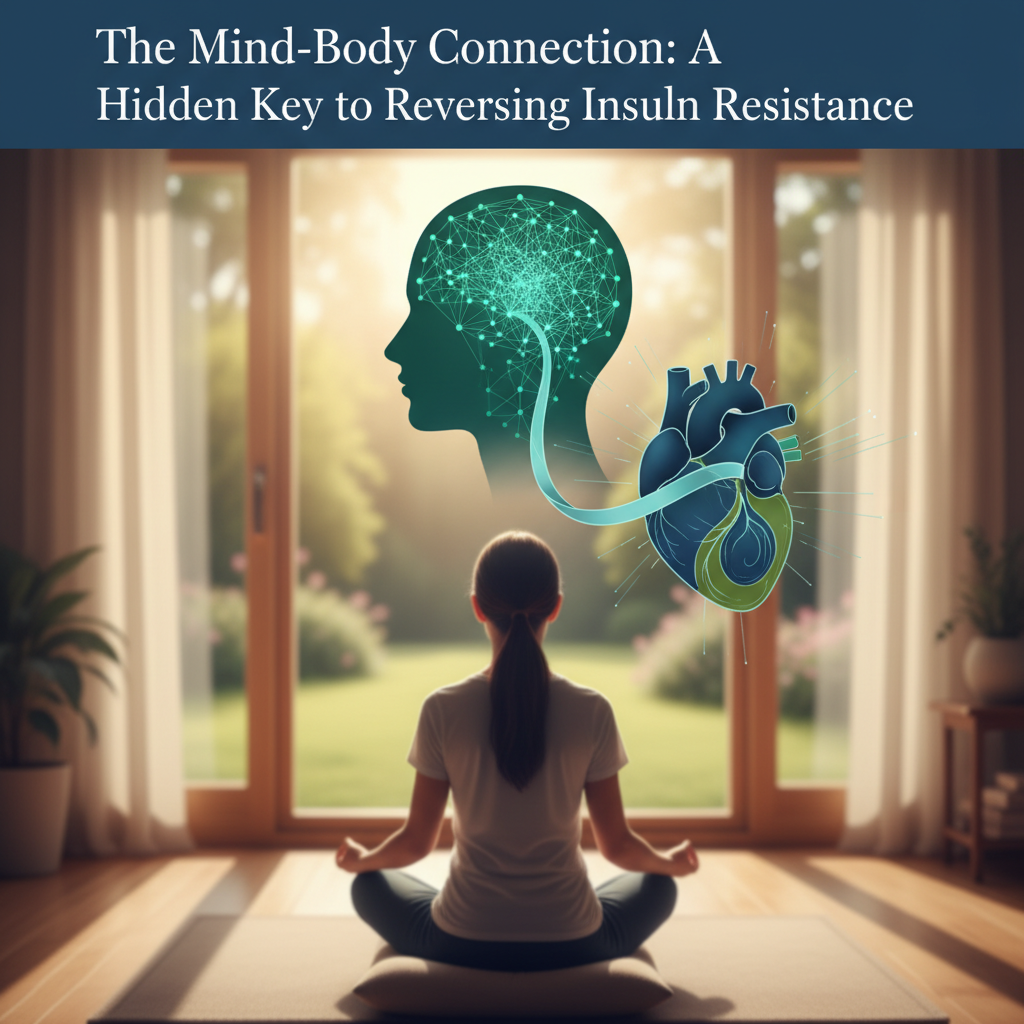
If you have been diligently tracking your macros, cutting out processed sugars, and hitting the gym, but your fasting blood glucose levels remain stubbornly high, you aren’t alone. Many people managing insulin resistance feel they are doing everything "right" according to the traditional playbook, yet the results don't follow.
The reason often lies in a factor that isn't found on a nutrition label: the mind-body connection. Your metabolic health is not just a result of what you eat; it is a reflection of how your nervous system perceives your environment. When we talk about the mind-body connection in blood sugar management, we are discussing a physiological reality where your brain, hormones, and glucose regulation systems communicate in a constant feedback loop.

The Biology of Stress: How Cortisol Drives Insulin Resistance
To understand why your thoughts impact your blood sugar, we have to look at the "Fight or Flight" response. When your brain perceives stress—whether it’s a looming work deadline or a physical injury—it triggers the adrenal glands to release cortisol and adrenaline.
These hormones have one primary goal: to provide your muscles with immediate energy to deal with a threat. To do this, cortisol signals the liver to undergo gluconeogenesis, dumping stored glucose into the bloodstream. In a primal setting, you would burn this sugar off by running or fighting. In the modern world, we usually stay seated at our desks.
Chronic stress leads to sustained high cortisol levels, which keeps your blood sugar elevated even if you haven't eaten a single carbohydrate. Over time, this constant flood of glucose forces the pancreas to pump out more insulin, eventually leading to decreased insulin sensitivity.
The Vicious Cycle of Emotional Health and Metabolic Spikes
The relationship between your mood and your metabolism is a two-way street. Anxiety and depression can trigger the release of inflammatory cytokines, which are known to interfere with insulin signaling.
Furthermore, there is a neurological drive for glucose during times of emotional tension. When the brain is stressed, it demands more fuel. This often leads to "stress eating"—a physiological urge to consume high-calorie, sugary foods to provide the brain with a temporary hit of dopamine and quick energy.
Breaking this loop requires stabilizing both your glucose and your nervous system. When blood sugar is stable, you experience better mental clarity and fewer mood swings, making it easier to manage stress.

Mindfulness Practices to Improve Insulin Sensitivity
Scientific research has increasingly shown that mindfulness isn't just "woo-woo"—it has a measurable impact on A1c levels. By engaging in deep breathing or meditation, you activate the parasympathetic nervous system (the "Rest and Digest" state). This lowers cortisol and allows the body to prioritize insulin efficiency.
- Mindful Eating: Instead of eating while scrolling through your phone, focus on the texture, taste, and smell of your food. This prevents the over-secretion of cephalic phase insulin and helps you recognize fullness cues.
- Grounding Techniques: Use the 5-4-3-2-1 technique (identifying five things you see, four you can touch, etc.) to pull yourself out of a stress spiral and prevent a stress-induced glucose spike.
Movement as a Moving Meditation
While high-intensity interval training (HIIT) is excellent for some, it can actually be counterproductive for those with high baseline stress, as it further elevates cortisol. For insulin resistance driven by stress, "moving meditations" like Yoga and Tai Chi are often superior.
These practices focus on the connection between breath and movement. This synergy helps dispose of glucose into the muscles without triggering a massive stress response. The slow, controlled movements help regulate the nervous system, lowering the overall metabolic load on your body.

Practical Steps for Daily Mind-Body Integration
Integrating the mind-body connection into your routine doesn't require hours of extra work. Small, consistent shifts can yield significant metabolic rewards:
- A 5-Minute Morning Grounding: Before checking your phone or email, sit quietly and take ten deep diaphragmatic breaths. This sets your nervous system to "safe" before the day begins.
- Prioritize Restorative Sleep: Sleep deprivation is a major stressor that causes insulin resistance the very next day. Aim for 7–9 hours to allow for hormonal recalibration.
- Journal for Emotional Release: Spend ten minutes at night writing down your stressors. Externalizing these thoughts can lower physiological inflammation and improve your fasting glucose numbers the following morning.
Embracing a Holistic Path to Metabolic Wellness
Managing blood sugar is about more than just restriction; it is about nourishment and regulation. By acknowledging the link between mental calm and metabolic stability, you unlock a powerful tool for reversing insulin resistance.
Remember, healing is a non-linear journey. There will be days when stress gets the better of you, and that is okay. View your blood sugar management not as a chore or a battle, but as a profound act of self-care. When you quiet the mind, the body often follows suit, finding its way back to balance.